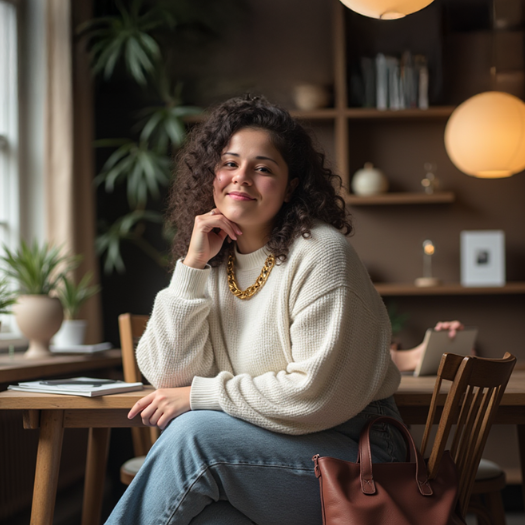
I grew up in New Cumberland, Pennsylvania, a small town with three traffic lights and not much of an art scene. Creativity always felt, to me, a little extra magical. Worth noticing. My mom and grandfather nurtured that sense of wonder, encouraging me to make things, to follow whatever caught my curiosity.
My first medium wasn’t paint or clay, it was food. Cooking taught me rhythm, care, and how small, deliberate acts can transform the ordinary into something beautiful. That sense of process and patience became the quiet foundation of how I now approach my art.
For a long time, art was something private, a quiet place I went to process the world. But over time, I realized it was more than that. It was how I listened. How I prayed. How I made sense of things that didn’t have words. That realization shifted everything and turned my creative practice into a form of spiritual inquiry and truth-telling.
Being a Christian and queer artist means I live in the in-between, a place that can feel both conflicting and deeply sacred. Rather than seeing those tensions as a divide, I try to treat them as a source of creative and spiritual energy. My art is how I show up before God as I am. It’s worship, but it’s also a kind of testimony.
Through my work, I hope people pause, breathe, and maybe reconnect with a bit of wonder. Whether it’s through clay, paint, or sound, I want viewers to feel, even if it’s just a small moment of goodness in their day. This isn’t a side project or a creative outlet for me. It’s my calling. At the end of my life, I want to be able to say I served God and the craft with everything I had.
The Synesthetic Vision
Because of my synesthesia, I experience the world through layers of color. People, songs, and emotions each carry their own hues and shapes. A melody can feel like soft light; a moment of grief can appear as a heavy wash of blue. My art is an attempt to translate those invisible sensations into something others can step inside of.
It started with painting, turning color into language, but the more I worked, the more I felt the need to build spaces that could hold the full sensory experience. That’s led me toward immersive installations, and ultimately to the development of the Synesthesia Study Gallery: a series of rooms designed to guide visitors through distinct emotional states using light, color, and sound.
Context and Future
I’m currently finishing my studies at Harrisburg Area Community College, where I’ve been doing independent research on the history of synesthetic art, from Rimbaud and Messiaen to artists like James Turrell and Olafur Eliasson. Their work has helped me situate my own practice within a broader lineage while deepening my understanding of how sensory art can shape human connection.
Right now, I’m seeking opportunities that will allow me to bring these ideas to life on a larger scale, specifically, artist residencies that provide the space, mentorship, and resources needed to move from concept to full realization. A residency in France, the birthplace of much of my research, would be especially meaningful, a chance to engage directly with the cultural and sensory roots of this work.
I’m at a pivotal moment in my practice. With a vision shaped by lived sensory experience, spiritual calling, and years of quiet study, I’m ready to bring these worlds into conversation, to create art that doesn’t just exist in space, but builds it. At the end of my time here on earth, I want to say that I served God, I served my craft and I gave every ounce of my being back to humanity.